
 Simulation Training Program
Simulation Training Program
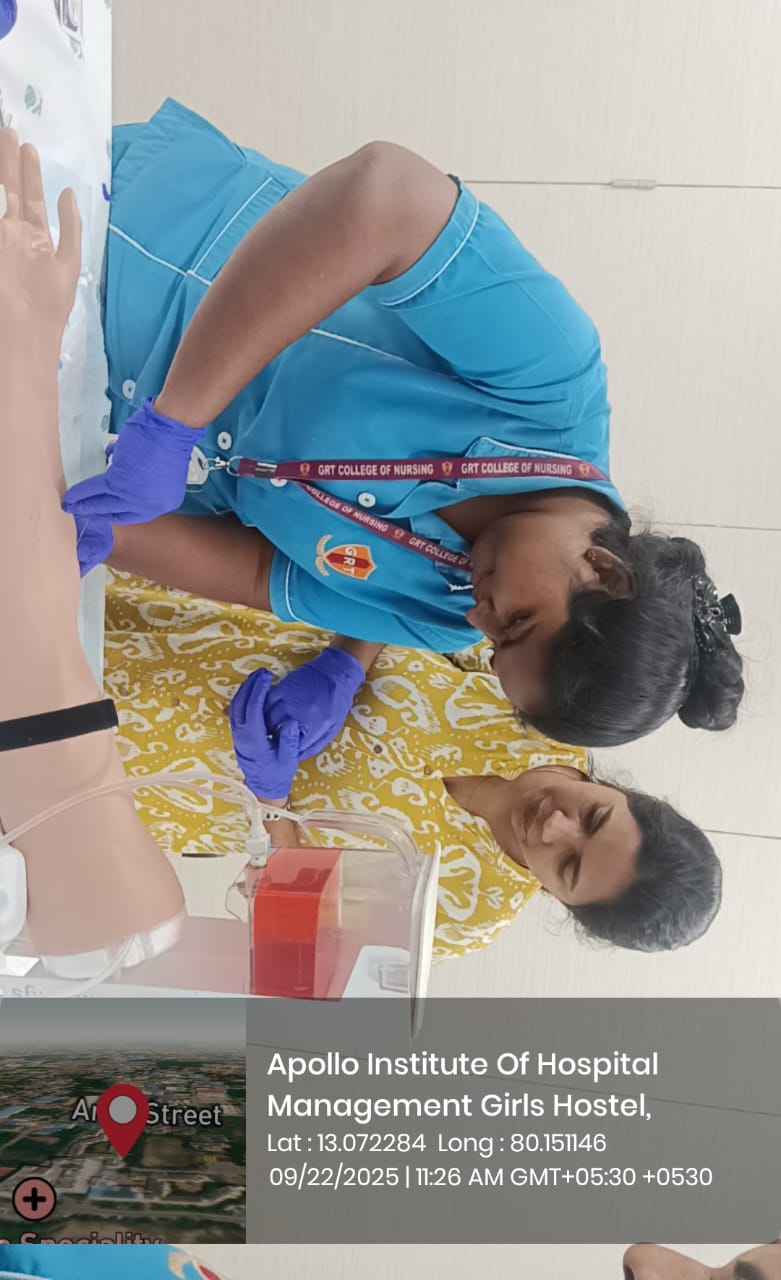
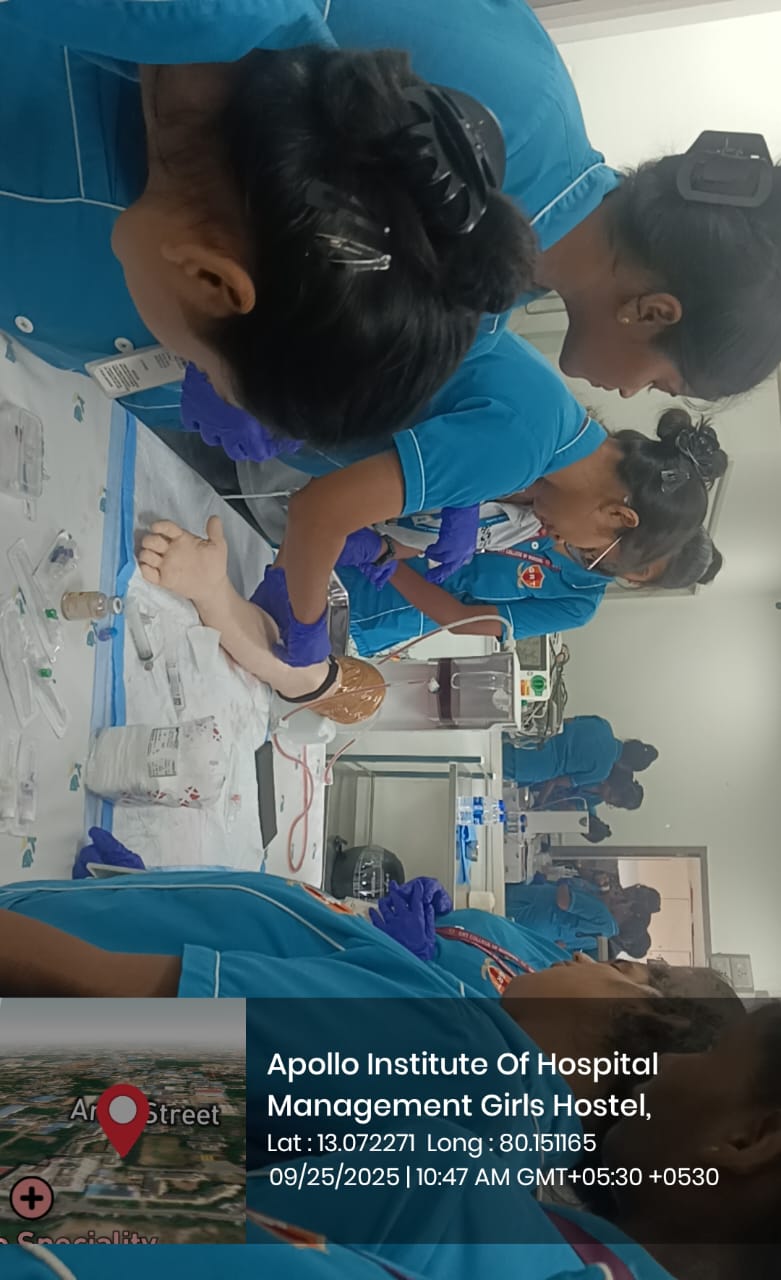
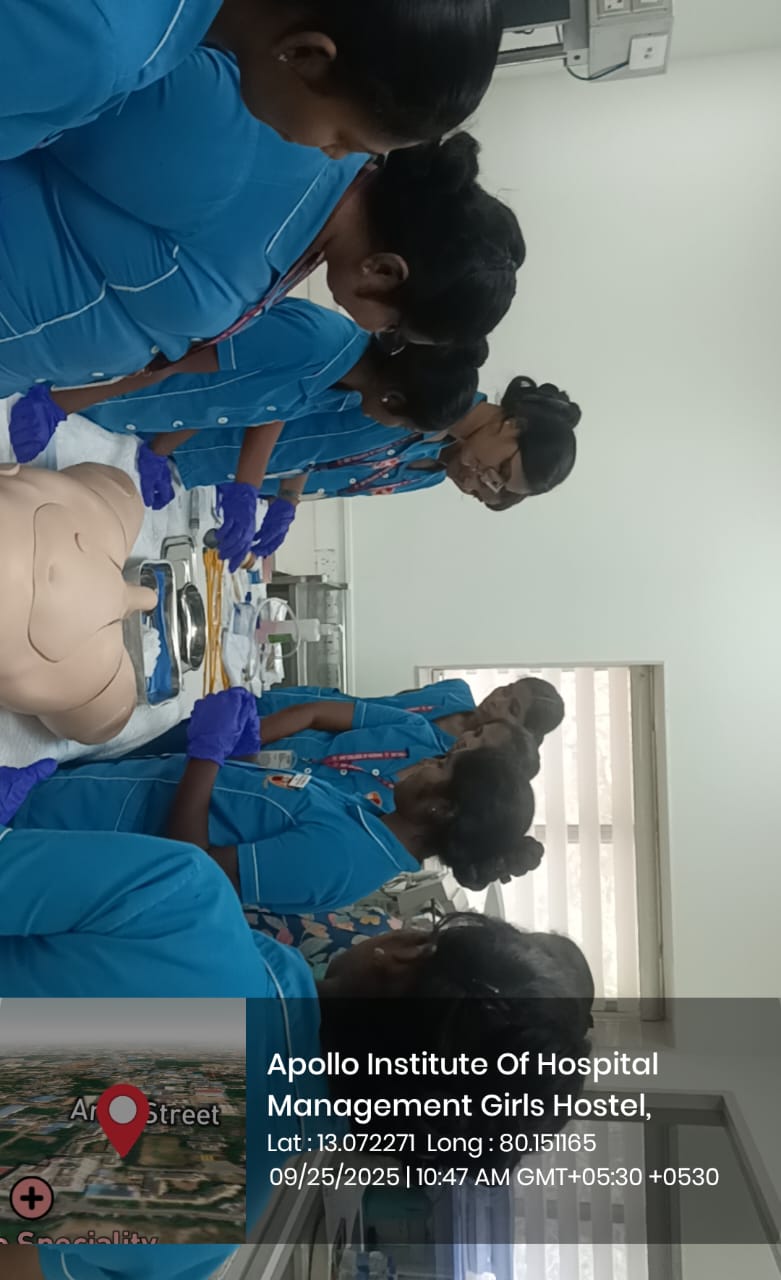
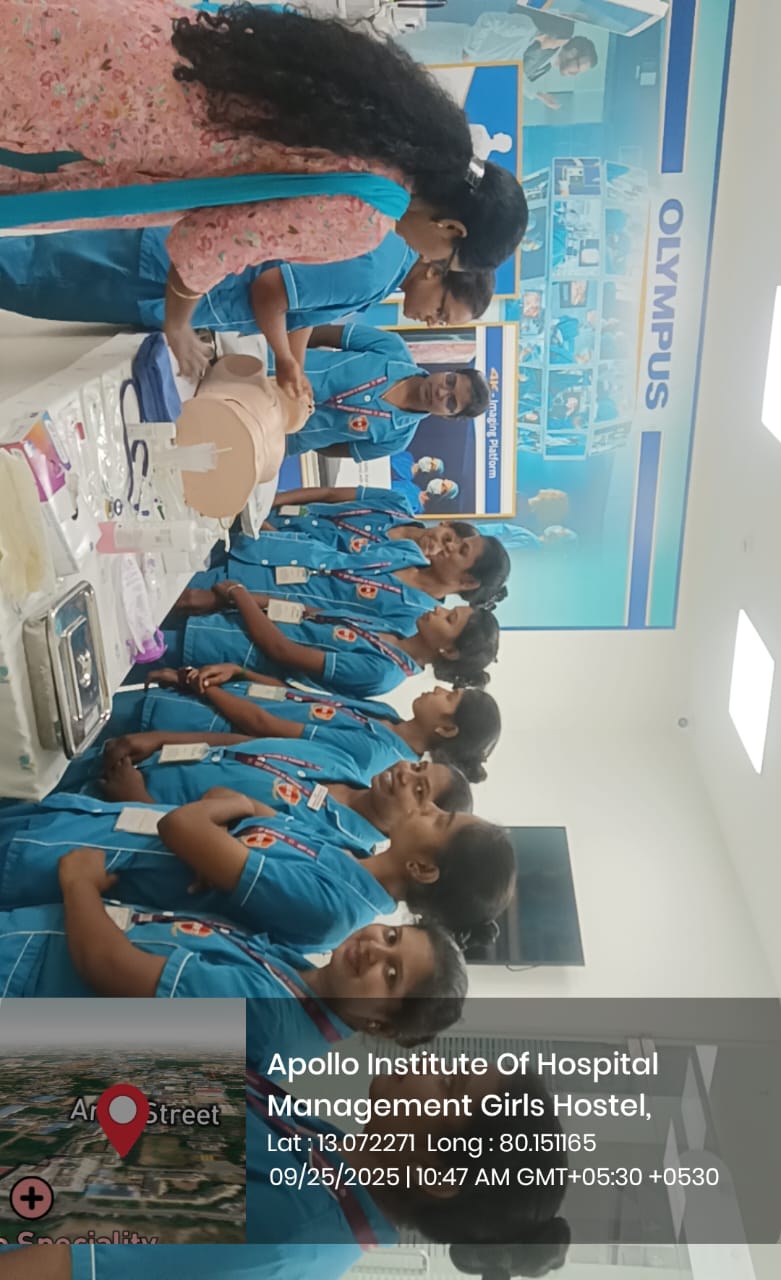
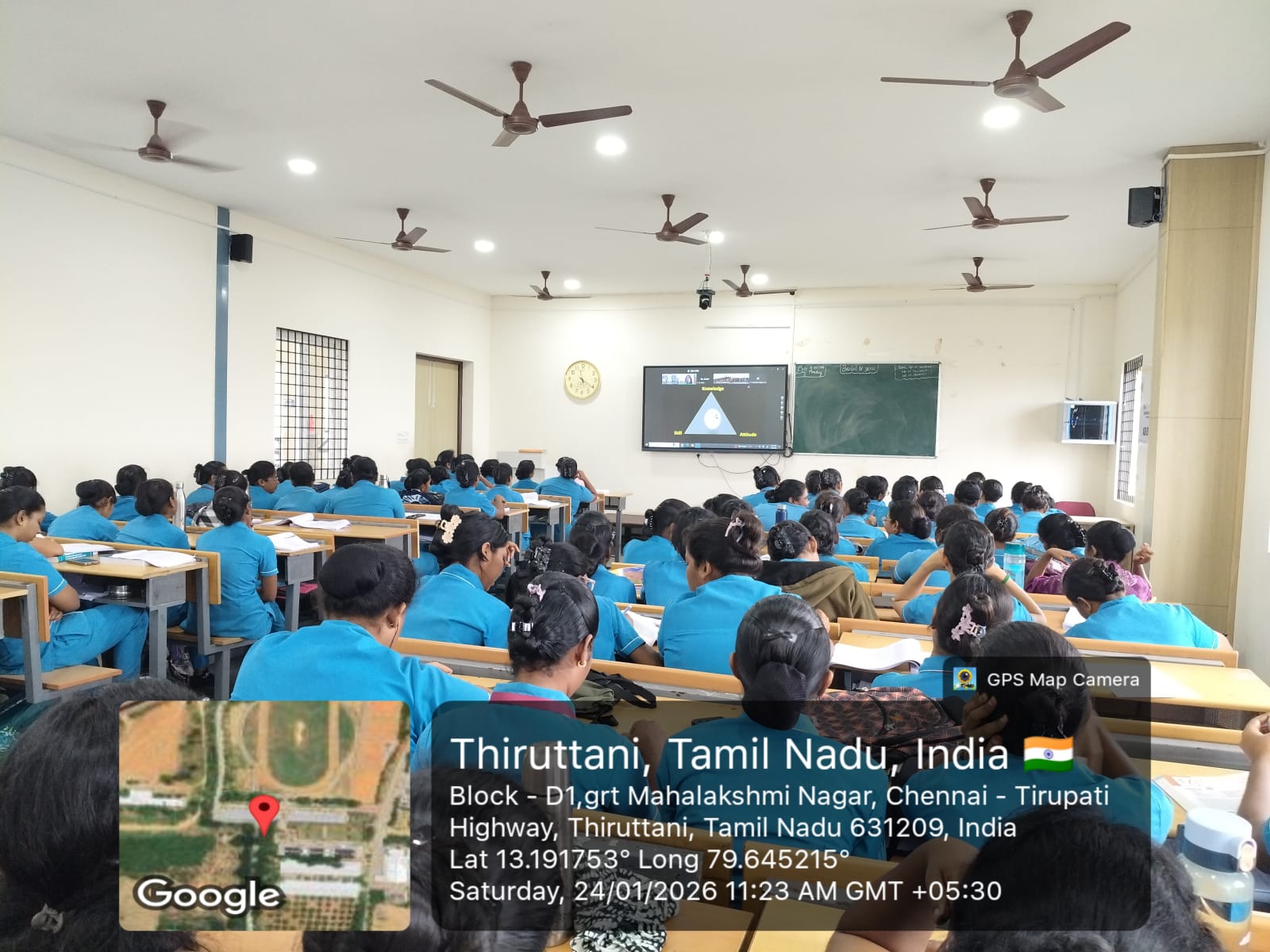
A three-day simulation-based training program was conducted to enhance clinical skills, critical thinking, teamwork, and decision-making abilities among students. The sessions were led by experienced instructors: Mrs. Durga Devi, Ms. Keerthana, Mrs. Merlin, Mrs. Basaneth, and Mr. Jeninth. The program combined theory, hands-on practice, and assessment-based learning to strengthen competency in essential nursing and emergency care skills.
Day 1: Introduction to Simulation Training and Fundamental Clinical Skills
Morning Session
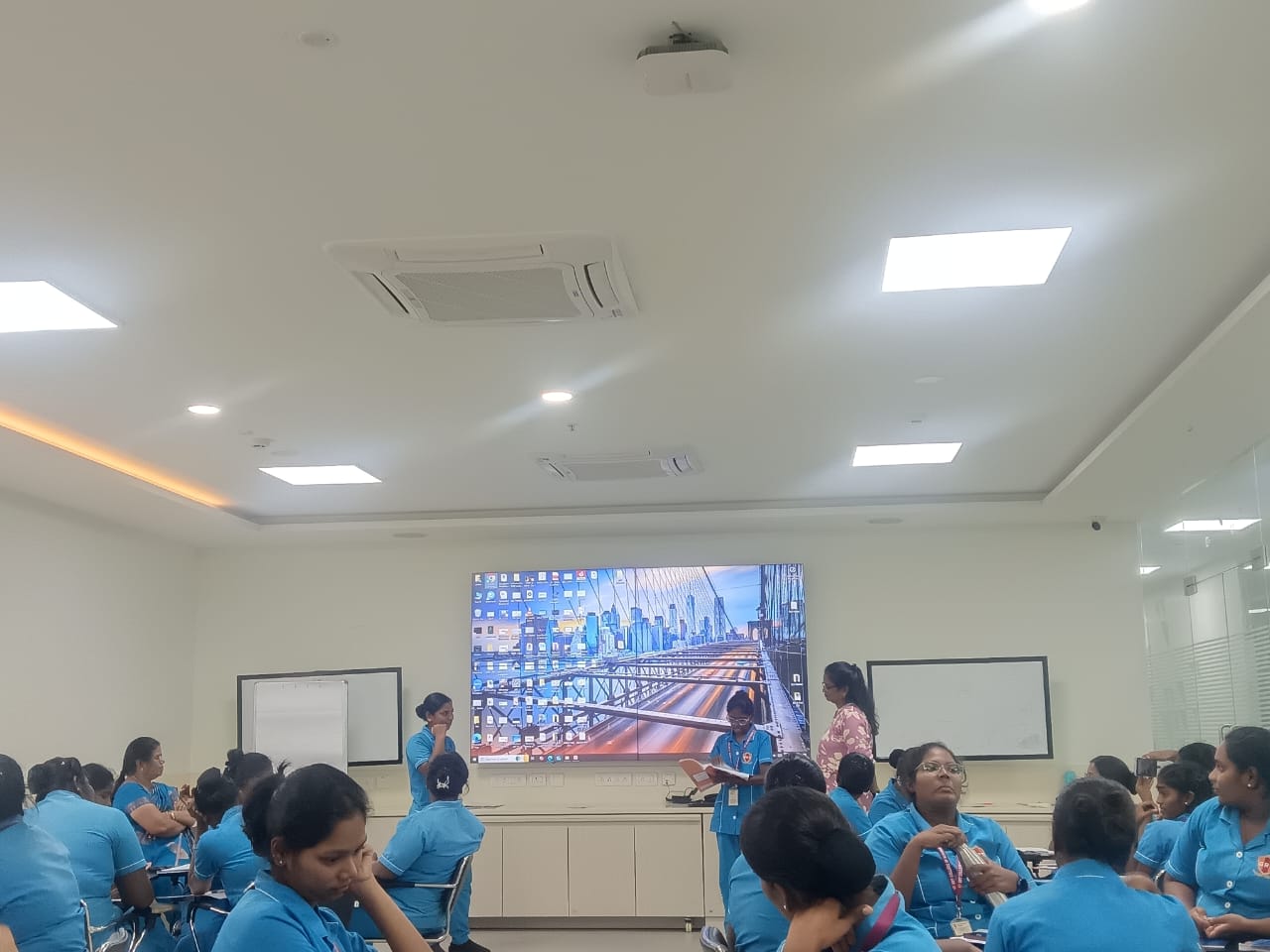
The day began with an introduction to simulation training by Mrs. Durga Devi, Simulation Instructor, who explained its objectives and importance in clinical education.
Students participated in four skill stations:
- Catheterization (Station 1): Demonstration of male and female catheterization, including step-by-step procedure and safety precautions.
- Ryle’s Tube Insertion (Station 2): Indications and correct insertion technique were explained and demonstrated.
- Intravenous Cannulation (Station 3): Taught by Ms. Keerthana, covering IV access techniques and injection sites (IM, Subcutaneous).
- Wound Dressing (Station 4): Demonstration of wound cleaning and infection prevention measures.
Afternoon Session
- Critical Thinking and Decision Making: Conducted by Mrs. Merlin, focusing on clinical judgment in critical situations.
- ABCDE Approach: Explained by Ms. Keerthana (Airway, Breathing, Circulation, Disability, Exposure).
- Communication Tools & MEWS: Introduction to Modified Early Warning Signs for early detection of patient deterioration.
Day 2: Emergency Care and Clinical Procedures
Morning Session
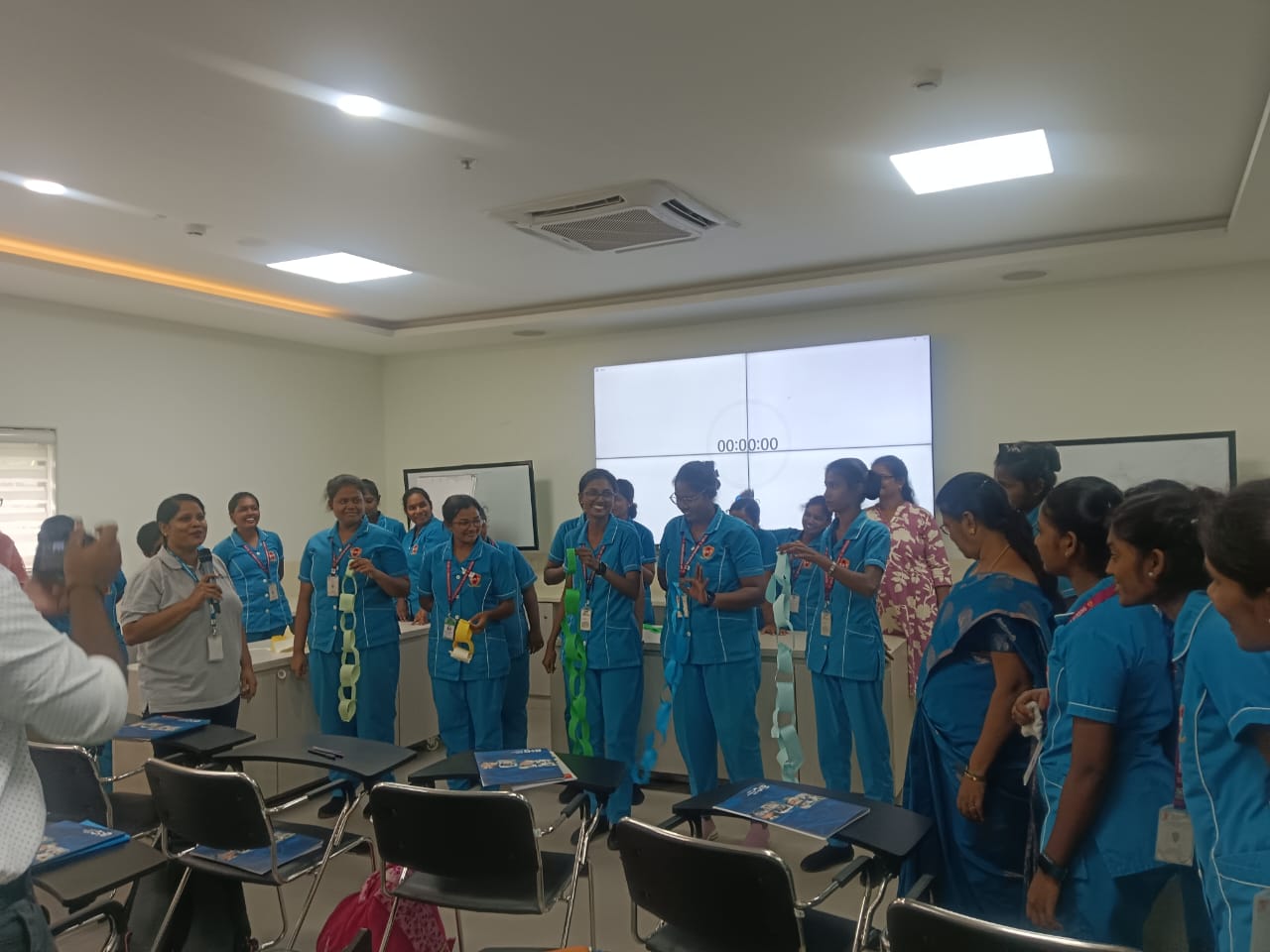
An interactive teamwork activity was conducted to improve communication, cooperation, and group coordination.
Practical skill stations included:
- Defibrillator Use (Station 1): Demonstration of safe handling and operation by Ms. Keerthana.
- Infection Control (Station 2): Biomedical waste management and needle-stick injury prevention by Mr. Jeninth.
- Airway Management (Station 3): Nasopharyngeal, oropharyngeal insertion, and LMA techniques by Mrs. Basaneth.
- Oxygen Administration (Station 4): Use of nasal prongs, masks, NRBM, Venturi mask, and nebulization by Mrs. Merlin.
Afternoon Session
- Drug Calculation: Safe medication administration for high-risk patients (Ms. Keerthana).
- Splinting and Cervical Traction: Including RTA patient management techniques (Mr. Jeninth & Mrs. Merlin).
- Tracheostomy and Colostomy Care: Infection control and care procedures (Mrs. Basaneth).
Day 3: Advanced Life Support and OSCE Evaluation
Morning Session
The day began with an interactive group activity to enhance engagement, teamwork, and communication skills.
A detailed lecture on Basic Life Support (BLS) and AED usage was delivered by Mrs. Durga Devi. Key topics included:
- CPR steps and techniques
- CPR modifications for pregnant patients
Students then participated in scenario-based CPR and AED practice in simulated cardiac arrest situations.
Afternoon Session: OSCE
An Objective Structured Clinical Examination (OSCE) was conducted with eight skill stations:
- CPR and Defibrillator
- Airway Management (Nasopharyngeal & Oropharyngeal)
- Laryngeal Mask Airway
- Injection Techniques (IM & SC)
- Nasogastric Tube Insertion and Feeding
- Catheterization
- Biomedical Waste Management & Hand Hygiene
- IV Cannulation